
Home / Electric Tricycles / Passenger
Electric Passenger Tricycles
The passenger family is the smallest in the AMOTO catalog — three listed models — and the one with the least published specification data. We present it at catalog level, honestly, and confirm every figure by inquiry.
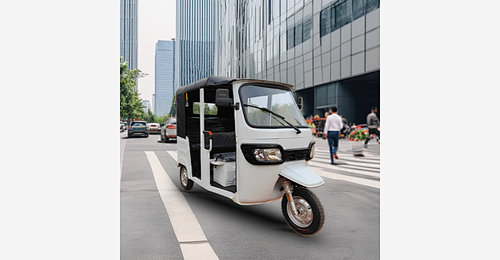
The three catalog models
- Enclosed passenger tricycle for taxi service — listed as an 1800W, 60/72V electric passenger tricycle with a 3-seat enclosure, aimed at taxi service.
- 4-seater electric rickshaw — listed with a 48V motor, lead-acid battery and a metal roof; the people-carrier entry of the family (see also electric rickshaws & tuk tuks).
- Sightseeing passenger tricycle — listed as a 2000W open-body three-wheeler with lead-acid battery, described for scenic-spot use with adult passengers.
Those listing titles are the sum of the published data for this family: none of the three pages publishes a specification block in the catalog, so this page carries no range, speed or load table for them — inventing one would be easy and wrong. What the titles do establish is the shape of the offer: an enclosed taxi format, an open sightseeing format, and a four-seat rickshaw format, spanning 48V to 72V platforms and 1800W to 2000W power classes.
How passenger-trike inquiries work
Because the published data stops at the listing, the inquiry carries more weight here than anywhere else in the catalog. Tell us the duty — taxi service, resort shuttle, scenic-area rental — plus passenger count, daily distance and your market's vehicle category for passenger three-wheelers. We will return the current model sheet for the matching listing, including the figures this page cannot publish, before any discussion of volumes. Operators comparing formats should also look at the four-wheel utility vehicles if weather protection and a load bed both matter.
What a passenger-trike order involves
Passenger vehicles are bought differently from cargo vehicles, and the inquiry should reflect that. The inquiry should cover seating and trim confirmation (bench materials, canopy or roof specification, grab rails), weather equipment by market, and the livery question — a taxi-format vehicle is a moving advertisement, and colour and branding are settled at order, not after. None of those items appears in the catalog listings for this family, which is why the passenger pages on this site carry inquiry prompts where other families carry tables. There is also a documentation asymmetry to plan around: the cargo family's CP-3 publishes an EEC field, while the passenger listings publish no certification field at all in the catalog data — so the document request for a passenger model is not a formality, it is the first deliverable. Budget the time for it in your launch plan, and do not advertise a passenger service against a model whose paperwork has not come back.
A realistic shortlist method
Send us the duty profile — service type, passengers, daily kilometres, market and category — and the format you favour (enclosed tuk, roofed rickshaw, open sightseeing). We will answer with the current model sheet for that listing and a straight statement of what the model can and cannot be documented for. If the answer is that a format cannot serve your market's category, we will say so at that stage, while the alternatives on this site — cargo formats, the A41 four-wheeler — are still open to you.