
Home / Mobility Scooters / 4 Wheel
4 Wheel Mobility Scooters
Four wheels are one of the mobility family's published formats, alongside three-wheel and folding models. AMOTO's headline four-wheel listing is a 500W model published with EEC COC for elderly riders.
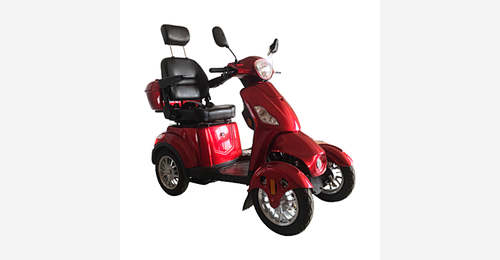
The 500W four-wheel model
The model's catalog page is titled as a 2025 mobility scooter with four wheels, a 500W motor and EEC COC, described as a powerful four-wheel mobility scooter for elderly riders. In a family where most listings are three-wheelers, this is the four-wheel configuration: four contact points and a seated driving position. Its published data stops at the format and the 500W figure in the title — no speed, range or dimension figures are published for this model.
Title data is what this model publishes — the page carries no specification block in the catalog extract — so range, charging and dimensions for it are confirmed at inquiry. What can be said from the listing is the format itself, the 500W power figure, the EEC COC reference in the title, and its positioning for elderly riders. The EEC/COC reference should be read the same way as elsewhere on this site: as the starting point for a document request, per the certification guide.
Four wheels elsewhere in the catalog
Four-wheel formats also appear as a 500W/800W elderly model in the mobility listings, and — in a completely different duty — as the A41 four-wheel cargo vehicle and the mini electric cars. Buyers sometimes arrive here looking for a small four-wheel runabout rather than a mobility scooter; if the rider does not need mobility-format controls and seating, the mini-car pages may be the better comparison, and if they do, this page's model is the one to pursue.
Four wheels or three for a first mobility scooter?
The catalog publishes no stability or turning-circle figures for either format, so this site does not rank them: the choice is made on transport, storage and the rider's own trial. The elderly buyers guide sets out the questions that decide it, and the folding page covers the transport question.
What documents should a mobility importer request?
For this model, request the EEC COC document set referenced in its title, for the exact model configuration, before ordering — the same discipline as the scooter range (see the guide).
Specifying the four-wheel order
An inquiry for the 500W four-wheel model should ask for the items its title cannot carry: the battery as shipped (the family's mainstream is lead-acid at 48V–60V, but this model's page publishes no battery line), the charger and charging time, overall dimensions and turning circle, seat specification and adjustability, and the EEC COC document set the title references. Those five answers convert the listing into a specification you can compare against any other supplier's four-wheel offer on equal terms. Care providers and dealers buying several units should also settle the parts question at the same time — tires, batteries and brake parts for a mobility fleet are a service commitment, and the European warehouse route (see the dealer program) is the channel to ask about — the company states warehouse deliveries in Europe typically within 3–7 days, but which parts are held there at any moment is a stock question, not a published list.
The canopy question
The photographed model carries a sun canopy — a reminder that weather equipment is part of a mobility specification in a way it never is for a Citycoco. Whether the canopy is standard, optional or market-specific is not stated in the catalog listing; put it on the inquiry list with the battery and dimensions, especially for fleet and care-facility orders where riders cannot simply choose not to travel on a bright or wet day.